
The Untapped Advantage
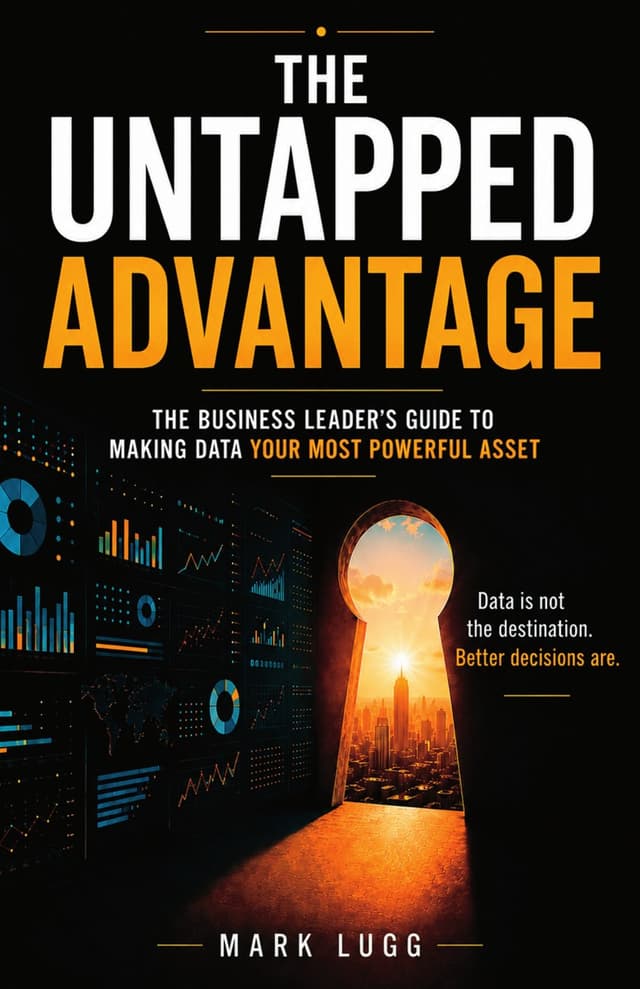
Data is not the destination. Better decisions are.
The Untapped Advantage is written for the business leader, the CEO, MD, COO or owner of a mid-sized business, who has sat through too many meetings arguing about whose numbers are right, watched an expensive data project fail to deliver, or felt the growing pressure of an AI strategy nobody can quite define.
This isn't a technical book. Drawing on more than twenty years of building and leading data programmes, it maps the journey from a point where data is a by-product of operations to one where it's the source of competitive advantage itself , each step described from the inside: what it feels like, why organisations get stuck there, and what it takes to move forward.
The data is already there. The advantage is waiting.
Pre-order the ebook on AmazonInside the book
Business thinking for the next generation
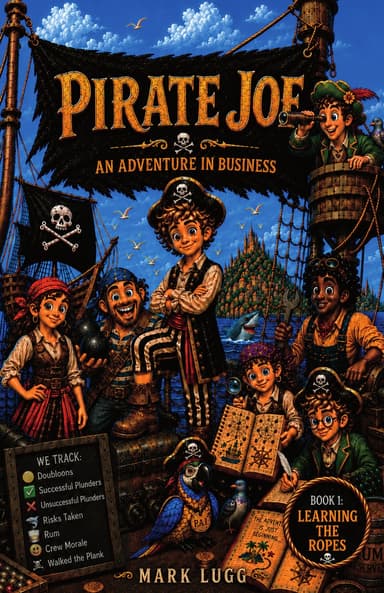
The same principles that run through my consulting work, building the right team, making smart decisions, and thinking clearly about risk, told as an illustrated pirate adventure for future entrepreneurs aged 9–14 (and the adults who steal it from them).
Sometimes the clearest way to explain how a business really works is to strip away the jargon entirely. That's exactly what Pirate Joe does.
Visit piratejoeadventures.com →Published writing, 2019–2025
These articles span 2019 to 2025, from the early days of making the case for data strategy, through the AI boom, to current thinking on climate data and adaptation. The views have evolved but the core argument hasn't: get the foundations right first.
Getting the foundations right
Written in 2019, these five pieces form the core of Mark's thinking on data strategy, what it takes to actually get value from data, and why most organisations get it wrong.
Data is the new gold, so why do we mine with incorrect tools and in the wrong locations?
Companies rush to hire data scientists before laying the foundations. The gold mining metaphor: why surveying the land first matters, covering team composition, GDPR governance, technology choices, and what a proper data foundation actually looks like.
Here's my data, now what's my business question?
Why businesses hire data scientists without giving them a problem to solve, and how to work backwards from the right business question rather than forwards from a pile of data.
Are we sinking in data?
Before GDPR, organisations collected everything and understood nothing. Why the arrival of data protection regulation was actually the forcing function for proper data strategy.
Is your data biased?
All data is inherently biased. The question is whether you know how much, and whether you've built that into your models. A look at how bias enters data and why it matters for predictive analytics.
Four key elements to becoming a data-centric organisation
The distinction between being data driven (acting on data) and data centric (making data a permanent strategic asset). Four practical elements: identifying core data, empowering users, designing processes around data flow, and choosing technology that serves the data.
AI, understanding it properly
Two pieces on artificial intelligence, separated by five years, but making a consistent point: AI is only as good as the foundations beneath it and the support you give it.
AI is the superstar employee of the future, so why don't we give it the right training and support?
AI is the David Beckham of technology, raw talent that needs coaching, tactics, and time. Why organisations set AI up to fail by expecting it to deliver without investment in data quality and ongoing refinement.
AI in Education: A Look into a Potential Future
A thought experiment on personalised AI learning aids, and a personal reflection on how AI could have changed the experience of someone who struggled in mainstream education.
Data in the real world
Two pieces written years apart, both grounded in live events, showing how data principles apply when the stakes are real.
The power of data and insight during the coronavirus outbreak
Written at the start of the pandemic. How data was shaping national strategy, what the COVID Symptom Tracker showed about public data collection, and the GDPR questions raised by health data sharing.
Key Trend in Value Creation, Climate Change Adaptation
Climate adaptation is often overshadowed by mitigation. From Kashmir's cricket bat industry to UK local authority planning, why accessible climate data tools are now a business necessity, and what the Met Office Climate Data Portal represents.
Follow on LinkedIn for new articles
New pieces published as thinking develops, on data strategy, AI, and business transformation.